
Introduction
In the sea of so-called “hidden gems” that we come across every single day in social media reels, Mainpat is a rare one that is hardly ever mentioned. And yet, this cozy nook full of picturesque meadows, stunning waterfalls, and gorgeous Insta-worthy spots is one of the most underrated destinations in India.
Located in the heart of Chattisgarh, Mainpat is also known as “The Shimla of Chattisgarh”. However, what makes it unique is the fact that it has been a Tibetan refugee settlement established since the 1960s. The people of Chhattisgarh swear by its delicious Tibetan food, lush forests, and untouched natural wonders. In this blog, I’ll share a day-by-day itinerary of my recent trip to Mainpat. I hope this helps you explore this beautiful gift of nature.
Day 1: The Trip Begins
I joined a group of travellers from Kolkata and we boarded the Samaleswari Express at Howrah at around 10:15 PM. The overnight train journey was mostly peaceful, with a few instances of loud passengers chit-chatting late at night. Prior to boarding the train, we had a sumptuous dinner at the Howrah food court and then waited at the AC Howrah executive lounge, where you can book hourly slots at 50 Rupees for an hour per person.
Day 2: Jharsuguda to Mainpat
The next day, we reached Jharsuguda in Odisha at around 10 AM. After having a quick breakfast at a local food joint, we freshened up at a nearby hotel and set forth for our journey to Mainpat (which is around 180 km away from Jharsuguda).
On the way to Mainpat, we visited the Kotebira Shiv Temple beside the Ib River. The river was flowing with all its might, owing to the monsoon rains. After a quick session of clicking photos, we had a filling lunch at a road-side Dhaba, before resuming our journey to Mainpat. We reached Mainpat late in the evening.
Our stay for the trip, the Snow Lion Resort, was a treat for the eyes. Resembling a Tibetan monastery, the resort is beautifully decked with Buddhist prayer flags and has a restaurant too. They have AC rooms with minimal décor and all basic amenities. We ended the day with a delicious dinner of chicken and rotis.
Day 3: A Day Spent Exploring Mainpat
The next day began with a quick breakfast at the resort. Following this, we set off for a day of local sightseeing. Our first stop for the day was Ultapani. So, what’s so unique about this place? The name says it all. Ultapani has a small stream that seems to be going downhill, but if you place a leaf or a paper boat in the stream, it will be carried upstream (in the reverse direction). While some say this unique place defies gravity, others claim the legend of Ultapani is nothing but an optical illusion. Whatever the cause may be, the fact remains that this place amuses both the young and the old.
Our next stop was the Thinthini Pathhar. This, in many ways, reminded me of Hampi’s musical pillars. Located in the village of Chhind Kalo, Thinthini Patthar is huge rock with grooves in it. You will find a few stray rocks places beside it. All you need to do is pick those rock pieces and hit the Thinthini Patthar. You will find that with each new placement of the hits, the Thinthini Patthar produces a different metallic sound. It’s almost like a musical instrument with different tones. A marvel of nature, indeed!
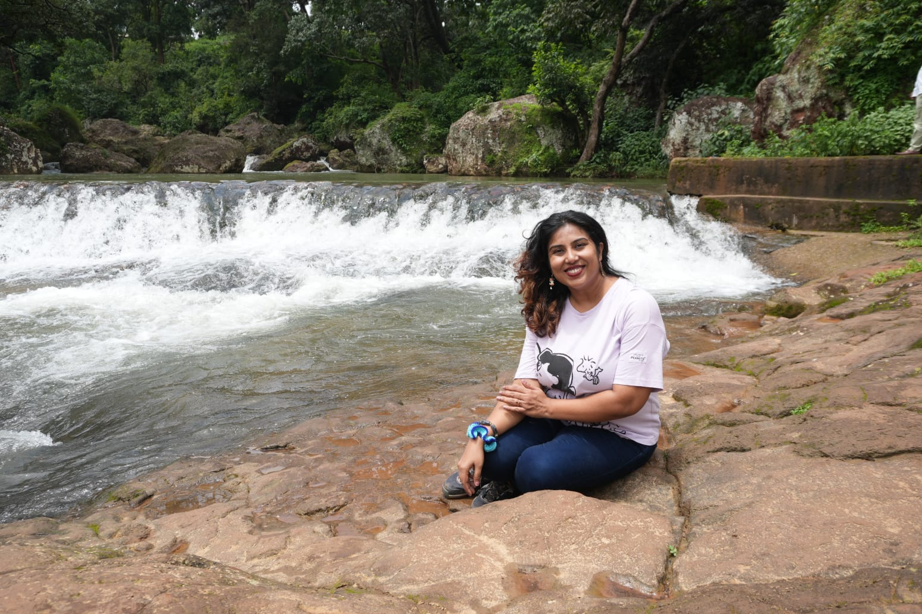
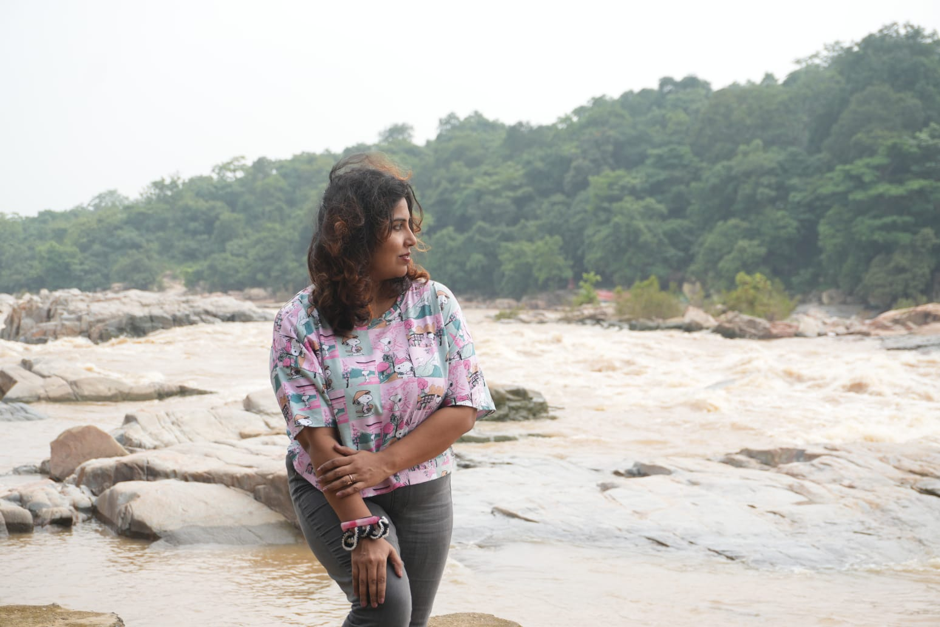
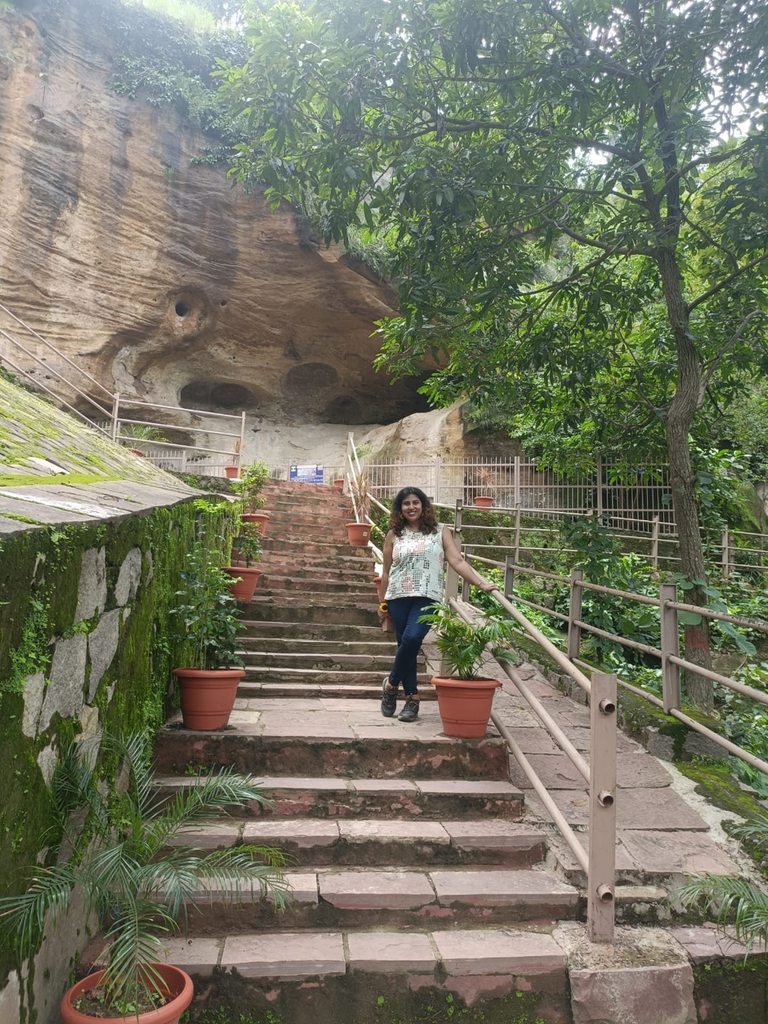
Next, we headed to the Sitabengra and Jogimara Caves. Located in the heart of Ramgarh Hill, these twin caves showcase inscriptions from the 3rd century BC. We didn’t go all the way up to explore the caves, as that would’ve taken us almost half a day. However, we did trek up to a certain point and relished the scenery around us. The surrounding forests added an element of mystique to the caves.
The sky gods seemed unimpressed, and, soon, we saw dark clouds gathering. We stopped at a road-side Dhaba for lunch. Within minutes, we were thanking our stars that we didn’t continue with the journey, as the skies burst and it started raining cats and dogs. The rain was so heavy that the asbestos ceiling of the Dhaba started leaking. Nonetheless, we finished our lunch and waited till the rains stopped.
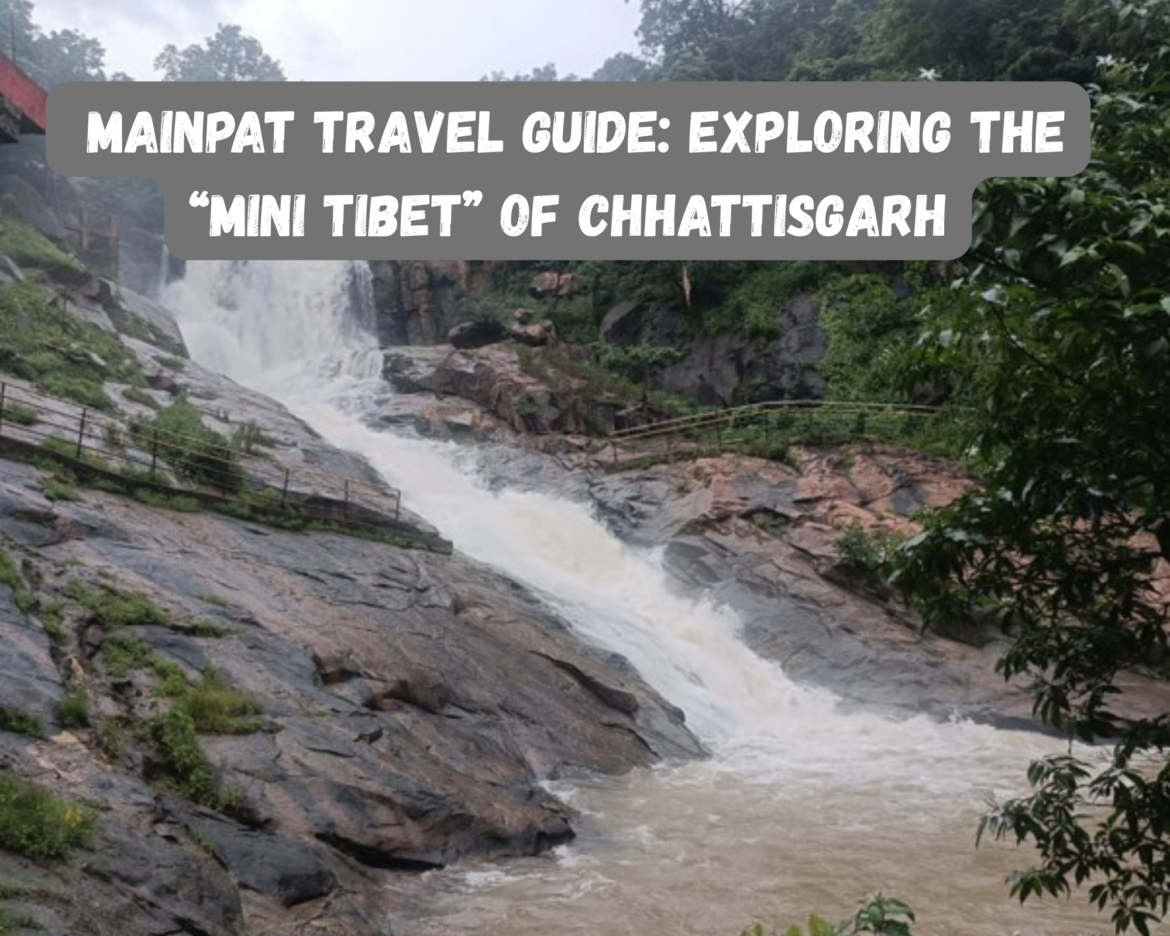
Our next destination was the Rajpuri Falls. Located in Jashpur, this waterfall offers a beautiful spot for pictures. However, here too, our little photo shoot was marred by a heavy shower. Nonetheless, we waited for the rain to stop again and enjoyed every bit of the cool weather complementing the gorgeous waterfall.
While the waterfall is quite accessible and doesn’t involve a trek, people must be aware of the fact that clicking selfies is prohibited here. This is because there’s hardly any gap between the river and the steps leading to the falls.
Day 4: The Tibetan Monasteries and More
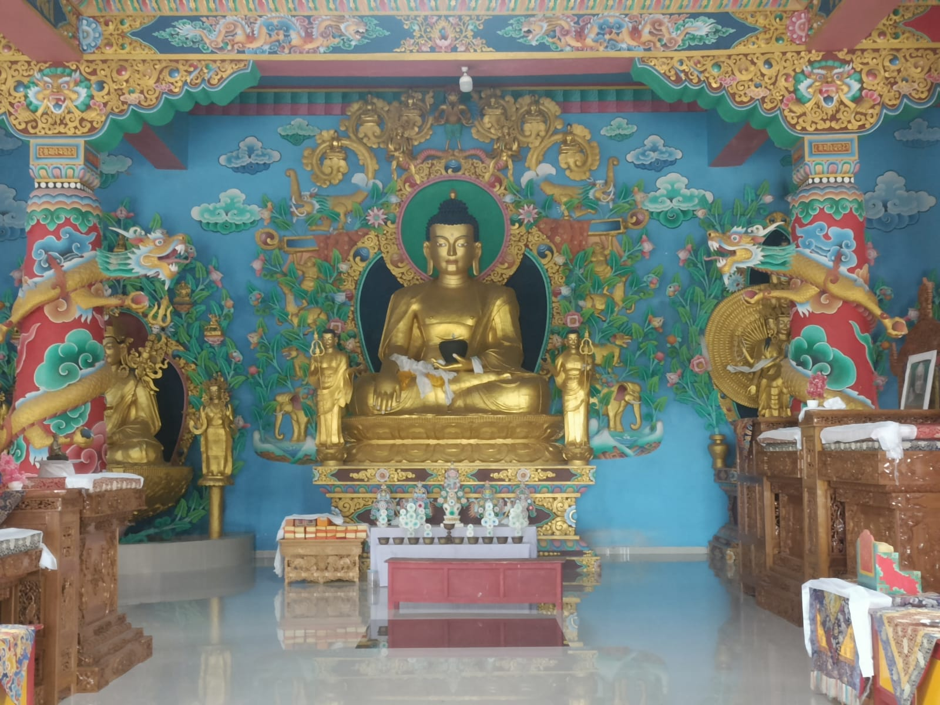
Our final day in Mainpat began with a recce of the Tibetan settlements. The first one was the Dhakpo Shedrupling Monastery, also known as one of the oldest monasteries in the area. We witnessed the monks chanting prayers inside the monastery and went around exploring its compound.
The next destination was the Tsori Gompa, another Tibetan monastery. This one was definitely bigger than the previous one and had ornate exteriors.
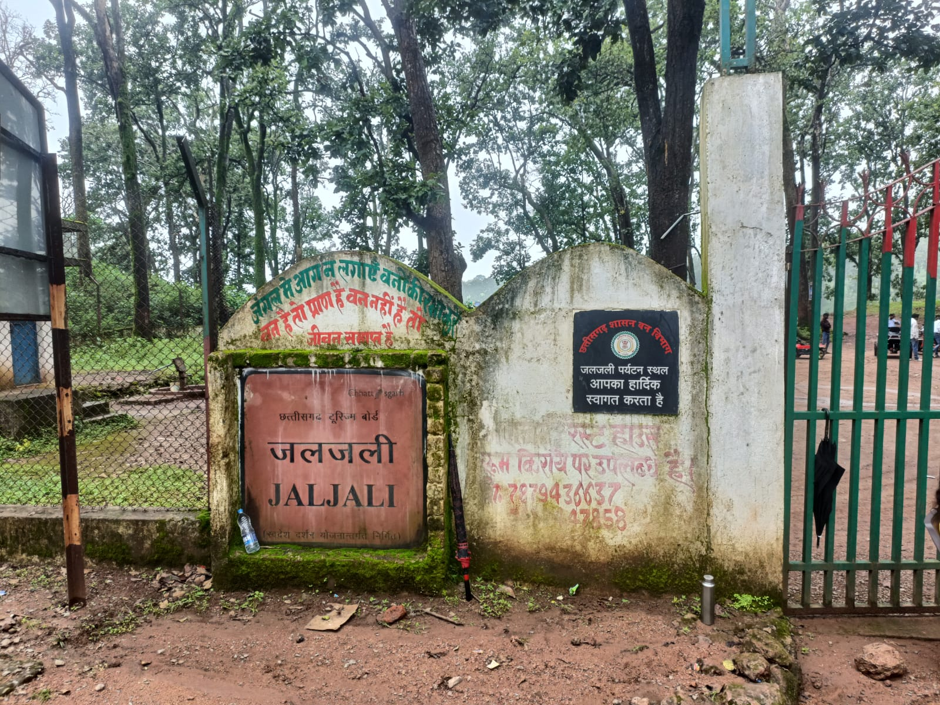
A road trip through the verdant farms took us to a forested area that’s also known as Jaljali, or “Bouncing Land”. Another natural wonder, this place is known for its spongy ground that doubles up as a trampoline of sorts. So, whenever you jump at Jaljali, the ground beneath your feet bounces but doesn’t give in. The science behind it all is that the upper part of the ground here is made up of an elastic layer, which pushes against the watery sub-soil, releasing trapped air and pushing the ground back up. Funny, isn’t it? Well, not so maybe. As we saw two people from our group slip into the Jaljali mud and struggling to get up. We had to pull them up with all our might. So, think twice before taking the Jaljali at face value. Also, note that there’s a nominal entry fee of 10 Rupees and you can opt for horse riding, cycling, and other activities at additional rates.
Our final destination for this trip was the Fish Point, another landmark waterfall of this area. You need to trek down the manmade steps for about 15 minutes to reach this waterfall, and the views are gorgeous. In fact, there are two waterfalls visible, one at a distance. The gurgling sound of the falls will definitely soothe your nerves, and the surrounding area will give you plenty of photo ops.
With this, our trip to Mainpat ended. Though Mainpat has tons of other natural attractions, such as Tiger Point, Mehta Point, etc., we had to cut our trip short because we had a train to catch in the evening and the forecast mentioned heavy thundershowers. A 5.5-hour journey by bus took us back to Jharsuguda. Though the evening was battered by rains, we eventually boarded the Samaleswari Express at night to reach back the next day. All in all, it was an eventful trip, though we felt we could’ve covered it in a less hectic manner.
Best Time to Visit
We were there during the monsoon season, when the Ib River was quite strong and the waterfalls appeared impressive. Weather conditions were also very unpredictable, with heavy rains having an impact on our sightseeing and even causing us to delay dinners at roadside eateries. The heat can also be intense at times, so it is better to be prepared for changing weather conditions rather than relying only on the season while planning your trip. Please feel free to contact us if you need any further itinerary of this place.
Things to Remember
- Carry rain jackets, umbrellas, and trek shoes, as the weather here is unpredictable.
- Book AC buses/tempo travellers/cabs for local sightseeing, as the heat can be intolerable at times.
- Carry mosquito and insect repellents, as the area, being forested, is full of insects of all sorts.
- There aren’t too many fancy cafes around. So, you have to depend on the basic road-side eateries.
- Mainpat isn’t too touristy and is still considered an offbeat getaway. So, there are a handful of washrooms on the trail and hardly any souvenir shops.
Conclusion
Mainpat turned out to be exactly the kind of offbeat destination we were looking for. It was not a smooth ride, there were heavy rains, muddy ground and a full agenda, but those were part of the ride. No wonder we had a lot to remember from Mainpat, from the strange movement of leaves at Ultapani to the musical sound of Thinthini Patthar, waterfalls to Tibetan monasteries.
We left with the promise of more to come; Tiger Point and Mehta Point. Well, if I had to do it all over again I would just slow down and give each place more time.
Frequently Asked Questions (FAQs)
Why is Mainpat considered as “Mini Tibet” of Chhattisgarh?
The region of Mainpat is referred to as the “Mini Tibet” as it has a Tibetan refugee settlement which was founded in the 1960s, as well as Tibetan food and monasteries.
What is the distance between Jharsuguda and Mainpat?
The travel time in the source is approximately 180 km by road from Jharsuguda to Mainpat.
What to pack for a Mainpat trip?
Rain jackets, umbrellas, trek shoes, mosquito and insect repellent, and expecting the weather to change and limited facilities are recommended by the source.
Mainpat Travel Experience by Titli Ghosh





