
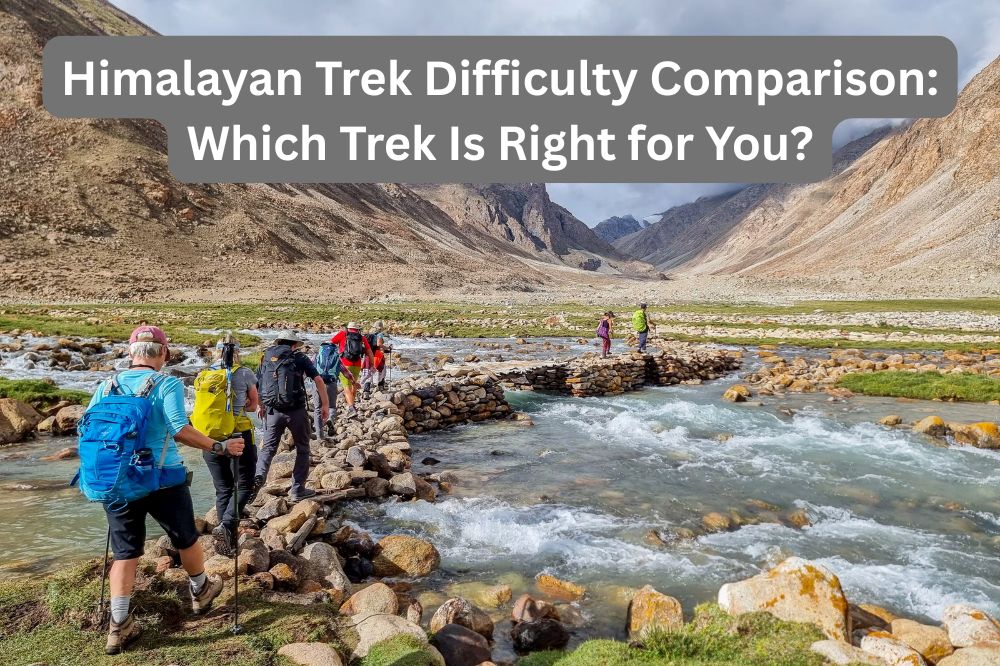
The Himalayas offer some of the world’s most spectacular trekking areas. Whether you are hiking through thick forests, across snow-bound passes or up to the tops, each trail is different. But not all of the Himalayan treks are right for all trekkers. Some trails are perfect for beginners, while others demand high fitness and previous trekking experience, plus high altitude adaption. One of the most crucial choices to make prior to undertaking a trek is selecting the one that is suitable for your level of difficulty.
People often want to do a trek after seeing pretty photos on social media but when it comes time to hit the trail, it can be very different. Even a short walk can be tiring with the long walking hours, high altitudes, poor weather conditions, and decreased oxygen levels. Being aware of the ease of various treks in the Himalayas helps you to prepare accordingly and makes the trek safe and enjoyable.
Why Trek Difficulty Matters
The level of difficulty of a trek is not solely based on distance. There are a number of reasons why a trek can be difficult. One of the largest factors is also altitude as the higher you get, the less oxygen you will have. Any reasonably simple path becomes challenging when you are at high altitudes. Likewise, difficult climbs, rock, river crossings, and weather conditions as well as the number of trekking days all add to the difficulty level.
A suitable trek will minimize fatigue, injuries, and altitude sickness. It also lets you savor all the beauty of the surroundings rather than going through each phase of the trip.
Easy Himalayan Treks for Beginners
For those new to trekking, it is best to start at an easy Himalayan trek. These walks are typically a bit shorter in duration, have clear paths, moderate elevation and decent campsites or lodging. Ideal for a beginner to learn basic trekking techniques while taking in the amazing views of the mountains.
Kedarkantha Trek is one of the most popular treks for beginners in India. It is known for its snow-capped trails in the winter, lush pine forests, and a rewarding view of the summit. With a couple of weeks of preparation time, most average fitness level people will be able to do this walk with ease.
The Dayara Bugyal Trek is another great choice with extensive alpine meadows and easy going trails. Unlike some mountain treks, Dayara Bugyal is not a very steep trek and it is suitable for all types of family treks, first timers and nature lovers alike.
Another popular trek for beginners is the Valley of Flowers Trek. Located in Uttarakhand, this UNESCO World Heritage Site is famous for its colourful alpine flowers, waterfalls, and beautiful mountain landscapes. The trail is not all flat, but is easy for most healthy travellers.
The Brahmatal Trek is also a great option for anyone who wants to do a snow trek but isn’t up for the very challenging mountain treks. Winter on the trail can include frozen lakes, snowed-in forests, and spectacular views of the Himalayan peaks.
Moderate Himalayan Treks
Trekkers who have completed a beginner trek and have built good physical fitness can move on to moderate-level Himalayan treks. The routes are typically longer, steeper and in higher elevations and involve more difficult terrain.
Hampta Pass Trek is one of the most famous cross country treks in India. It is the only link between the lush green Kullu Valley and the barren landscapes of Lahaul, with all the changes in landscape within a few days. The trail is a little more challenging than beginner’s trails, as the trekkers will experience river crossings, rocky sections, and glacier regions.
Annapurna base camp trek in Nepal is also a popular moderate trek. This trek winds through delightful villages, rhododendron woods, suspension bridges and terraced fields to the Annapurna sanctuary. The trekking tracks are well-maintained most of the time, but with an altitude of more than 4,000 metres, it is crucial to have good physical fitness during the day’s hikes.
Kashmir Great Lakes Trek is also of moderate difficulty level. It offers trekkers mesmerizing views of the mountains, colourful meadows and alpine lakes. There are a few challenging ascents and descents though that will need a bit of stamina and endurance.
Difficult Himalayan Treks
For the experienced trekkers who are seeking for a greater challenge, they might prefer to undertake more challenging expeditions in the Himalayas. These hikes are at higher elevations and for longer periods, in challenging terrain and fast-changing weather. It is recommended to be acclimatised and have prior trekking experience.
The Goechala Trek in Sikkim is one of the most rewarding high altitude trek in India. The route takes several days of back-to-back trekking to reach Kanchenjunga, the third tallest mountain in the world, with steep forest and rugged mountain landscapes.
Everest Base Camp Trek is one of the world’s most popular trekking adventures. This is not a technical climb, but the route climbs to more than 5,300 metres. This is a tough trek in terms of both physical exertion and mental endurance, as the trek takes place in thin air, and is back and forth for almost 2 weeks.
Pin Parvati Pass Trek is one of the hilliest treks in the Himalayas that includes glacier crossing, snow fields, rocky terrain and remote mountain geography. This trek is recommended only for highly experienced trekkers, who are physically fit with high stamina and with some previous trekking experience at high altitude.
Likewise, the Rupin Pass Trek is famous for its high passes, hanging villages, waterfalls, snow bridges and magnificent mountain views. Requires strength and ability to climb difficult surfaces.
Comparing Himalayan Trek Difficulty
Kedarkantha, Dayara Bugyal, Brahmatal and Valley of Flowers are the best options for beginners when it comes to comparing the Himalayan treks. The walks are shorter, and the walks are not as high. Moderate trekking involves more stamina, endurance, cardiovascular fitness and some trekking experience, like Hampta Pass, Annapurna Base Camp, Kashmir Great Lakes etc.
Trekking activities at Everest Base Camp, Goechala, Rupin Pass and Pin Parvati Pass would be tougher as they involve a combination of high altitude, longer duration and difficult mountain environment. Such ascents are best made after having had much trekking experience and adequate preparation.
How to Choose the Right Himalayan Trek
Not all the highest or the most challenging treks are the best in the Himalayas. Rather, it’s the journey that is suitable for your fitness, experience, time and objectives. Easier trails are recommended for first-time trekkers so that they can learn how their bodies react to trekking and altitude. Once they get used to and build confidence in their abilities, they can slowly work their way up to bigger adventures.
For those who want to see the snow-covered landscape, Kedarkantha and Brahmatal are great to visit. Hampta Pass is a good option for those who wish to explore changing landscapes and mountain passes. For those aspiring to international Himalayan trips, they can prepare for Annapurna Base Camp and then move to Everest Base Camp.
Fitness preparation for hiking in the Himalayas.
Whether the trek to the Himalayas is easy or difficult, it is crucial to get your body ready for it. Begin exercising about 6-8 weeks before your hike. Walking, jogging, cycling, stair climbing and strength training are great ways to build endurance. Strengthening exercises such as squats, lunges and core exercises build the muscles involved in trekking.
During your training walks, make sure to practice carrying the backpack in addition to being physically fit. This will help your body adapt to the weight you will be hauling on the trail. Equally crucial for a successful trek is staying hydrated, eating healthy food and getting sufficient rest.
The following are safety tips for every trekker.
Safety is always the number one priority, regardless of which of the Himalayan treks you select. Avoid running, particularly in high altitude areas, and walk at your own speed. Increase fluids throughout the day to decrease the risk of developing altitude sickness and dehydration. Ensure trekking shoes are in good condition and have good grip, dress in layers and bring rain gear as the weather can change quickly.
Most important, obey your trek leader and do not ignore symptoms like excessive headache, dizziness, nausea or breathlessness. If altitude sickness occurs, it is best to descend to a lower elevation.
Conclusion
The Himalayas is a place where every level of adventurer can enjoy trekking experience from beginners to experienced. These are the best places to take your first steps in the world of mountain trekking including easy trails such as Kedarkantha, Dayara Bugyal, Brahmatal and Valley of Flowers. Moderate treks like Hampta Pass OR Annapurna Base Camp are more challenging and stunning, while more demanding treks like Everest Base Camp, Goechala, Rupin Pass and Pin parvati pass are testing ones physically and mentally.
You must be aware of the level of difficulty of every trek, and take appropriate measures to ensure a great experience of the incredible Himalayan beauty with your total confidence. But remember, it’s not about doing the toughest trekking, it is about creating the most memorable moments that you can have while trekking safely and responsibly. Please feel free to contact us if you need any further itinerary of this place.






