
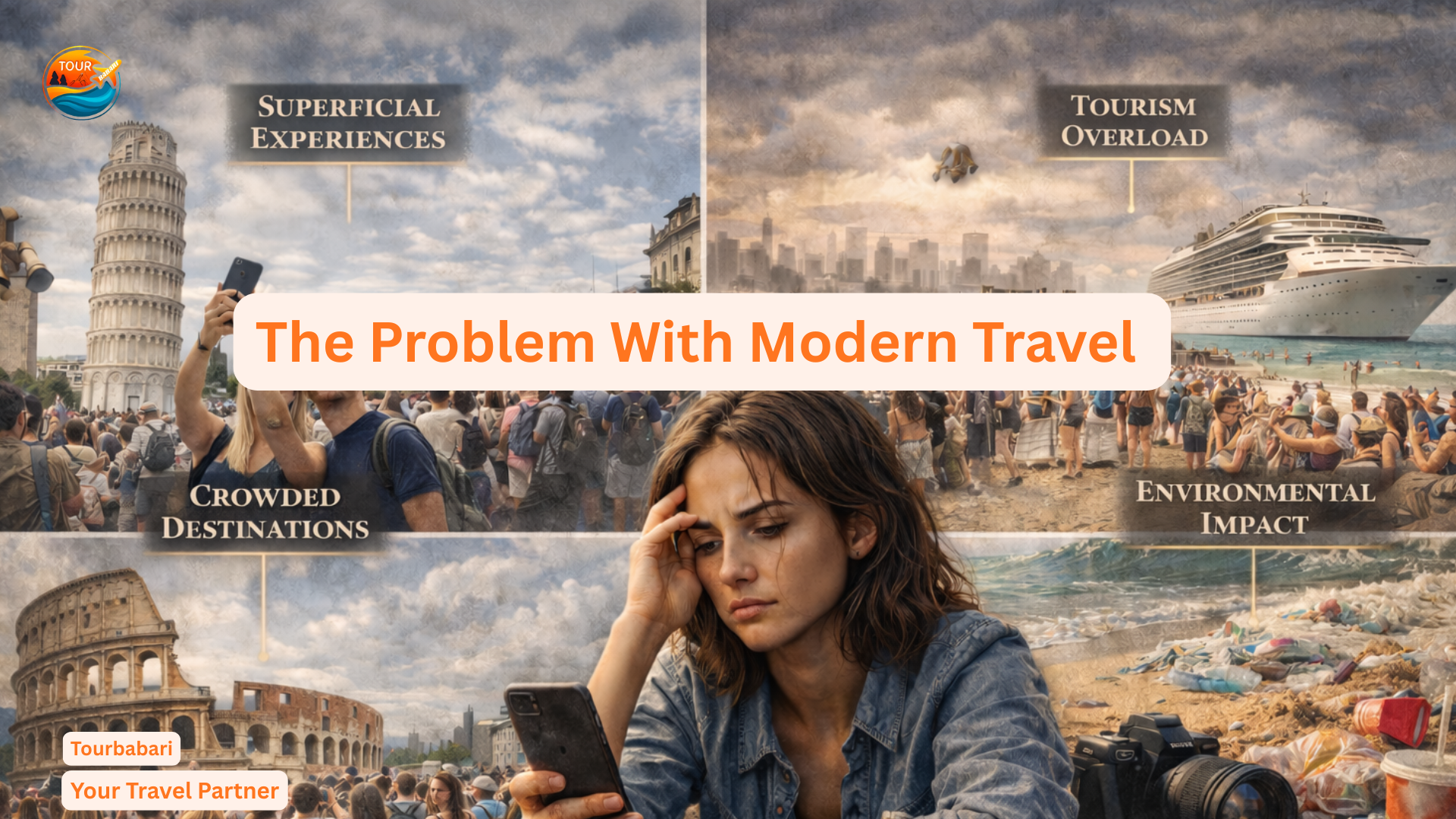
Travel today is easier than ever before. We can book flights in seconds. We can reserve hotels from our phone. We can see reviews from real people before we even pack a bag. The world feels small and close.
The Problem With How We Travel Today is becoming more visible in every corner of the world. The Problem With How We Travel Today is not just about flights or hotels, but about the habits and expectations we have as modern travelers. The Problem With How We Travel Today includes overcrowded destinations, rising carbon emissions, and pressure on local communities.
When we look closely, The Problem With How We Travel Today is driven by convenience and cheap deals that encourage frequent trips. The Problem With How We Travel Today also reflects how social media pushes people to visit the same “trending” places again and again. Because of this, The Problem With How We Travel Today affects natural landscapes, historic cities, and fragile ecosystems.
But there is a problem.
Modern travel is growing fast. Too fast in many places. While it brings money and jobs, it also brings damage. Cities are crowded. Nature is under pressure. Local people feel pushed out of their own neighborhoods.
This blog looks at the real problems with how we travel today. It also explains what can be done to fix them. If we want travel to stay beautiful and meaningful, we need to understand what is going wrong.
Understanding The Problem With How We Travel Today
Overtourism Is Destroying Popular Places
One of the biggest problems in modern travel is overtourism. This happens when too many visitors go to the same place at the same time.
Cities like Venice and Barcelona have struggled with large crowds for years. In Venice, millions of tourists visit each year even though the city has a small local population. Big cruise ships used to pass very close to the historic center, which caused environmental and safety concerns. The government later restricted large ships to protect the city.
In Barcelona, local residents have protested against too many tourists. Rent prices have increased. Streets are packed. Daily life has become harder for people who live there.
Overtourism also affects natural sites. Mount Everest has seen traffic jams near the summit during peak climbing season. Too many climbers mean more waste and higher risks.
When too many people visit one place, the experience becomes worse for everyone. Visitors feel rushed. Locals feel frustrated. The place itself suffers damage.
Cheap Flights Encourage Too Much Travel
Low cost airlines have changed the way we travel. Flights are often cheaper than train tickets. Weekend trips to another country feel normal now.

While this sounds good, there is a hidden cost. Aviation produces a large amount of carbon emissions. According to global environmental data, air travel contributes a significant share of greenhouse gases. As more people fly, emissions grow.
Budget airlines make it easy to take short trips often. Many people fly for just two or three days. This increases the number of flights and the total pollution.
Travel should connect people. But when we fly too often without thinking about impact, we harm the planet that we are trying to explore.
Another part of The Problem With How We Travel Today is short-term thinking—quick vacations without considering long-term impact. The Problem With How We Travel Today creates waste, pollution, and cultural disruption in many popular destinations. If we want real change, we must understand that The Problem With How We Travel Today requires responsible tourism, mindful planning, and sustainable choices. Recognizing The Problem With How We Travel Today is the first step toward creating a better future for travel.
Social Media Is Changing Why We Travel
Social media has a strong influence on travel choices. Platforms like Instagram and TikTok shape trends very fast.
A single viral video can turn a quiet village into a crowded hotspot. People visit places just to take photos. Some do not respect local culture. Some ignore rules to get the perfect picture.
There have been cases where natural areas were damaged because visitors stepped on protected land for photos. Some temples and cultural sites have reported visitors behaving in ways that are not respectful.
Travel should be about learning and experience. But today it often becomes about showing others where we went.
Local Communities Are Being Pushed Out
Short term rental platforms like Airbnb changed the housing market in many cities.
Homeowners can earn more money by renting to tourists than to local families. As a result, many apartments are no longer available for long term rent. This raises housing prices.
In cities such as Lisbon and Amsterdam, governments have created new rules to control short term rentals because of housing shortages.
When local people cannot afford to live in their own neighborhoods, culture disappears. Restaurants become tourist focused. Shops sell souvenirs instead of daily goods.
A city becomes a product instead of a home.
Environmental Damage Is Growing
Tourism depends on nature. Beaches, mountains, forests and wildlife attract visitors. But tourism can also destroy these places.
Plastic waste is a serious issue. Popular beaches around the world deal with trash left by visitors. Coral reefs suffer from pollution and careless diving.
For example, parts of Maya Bay were closed for years because too many tourists damaged the coral ecosystem. The government decided to stop visitors to allow nature to recover.
Wildlife tourism also raises concerns. In some places, animals are used for entertainment. Elephants are forced to carry tourists. Wild animals are kept in poor conditions for photos.
Travel should protect nature not harm it.
Cultural Respect Is Often Ignored
Travel brings different cultures together. This is a positive thing. But problems arise when visitors do not respect local customs.
In some countries, tourists wear inappropriate clothes at religious sites. In others, they ignore rules about photography or noise.
Cultural heritage sites face damage due to careless behavior. Graffiti on ancient monuments is a real issue in several destinations.
When culture becomes only a background for photos, its true meaning is lost.
The Travel Industry Focuses on Profit Over Sustainability
Hotels, airlines and tour operators aim to increase bookings. Growth is often the main goal.
Large resorts sometimes use too much water in areas that already face shortages. Cruise ships bring thousands of passengers at once to small towns. Local infrastructure struggles to handle this pressure.
Some companies promote eco friendly travel. But many still prioritize profit over long term care.
Sustainable tourism requires planning. It needs limits on visitor numbers. It requires investment in waste management and clean energy.
Without clear policies, damage continues.
Climate Change Makes Travel Riskier
Climate change affects tourism in many ways. Heat waves are becoming more intense in parts of Europe. Wildfires have forced evacuations in tourist regions. Floods disrupt travel plans.
Ski resorts face shorter winter seasons due to rising temperatures. Island nations deal with rising sea levels.
Travel both contributes to climate change and suffers from it. This creates a cycle that is hard to break.
If we ignore this link, future generations may lose access to many beautiful places.
The Loss of Authentic Experiences
Many popular destinations now look similar. Global brands replace local shops. Chain restaurants appear everywhere.
Travelers often search for something real and unique. But mass tourism turns special places into commercial zones.
In some historic areas, traditional houses become souvenir stores. Local crafts are replaced by imported goods.
When culture becomes a performance for visitors, authenticity fades.
What Can Be Done
The problems with modern travel are serious. But they are not impossible to solve.
1. Choose Sustainable Travel Options
Travelers can select eco friendly hotels. They can reduce plastic use. They can respect local rules.
2. Visit Less Known Places
Instead of crowded hotspots, explore smaller towns. This spreads economic benefits and reduces pressure.
3. Travel Less Often but Stay Longer
Longer stays reduce flight frequency. They allow deeper connection with local culture.
4. Support Local Businesses
Eat at family owned restaurants. Buy from local artisans. Hire local guides.
5. Governments Must Create Strong Policies
Authorities can limit visitor numbers. They can regulate short term rentals. They can invest in green transport.
A Better Way to Travel
Travel is not the enemy. Careless travel is the problem.
When done responsibly, tourism supports jobs and cultural exchange. It builds understanding between countries. It protects heritage through funding and awareness.
We must change how we think about travel. It should not be about collecting photos. It should be about learning and respect.
The future of travel depends on choices made today. Travelers must act responsibly. Companies must think long term. Governments must enforce smart rules.
If we care about the planet and local communities, we can still explore the world without destroying it. Travel should leave memories not damage.
The choice is ours. We can continue to rush through the checklist and document the performance and accumulate the credentials of global citizenship. Or we can slow down and look closer and risk being genuinely moved. The first path is easier. The second is the only one that leads anywhere worth going.
References
- UNWTO. Overtourism: Understanding and Managing Urban Tourism Growth Beyond Perceptions. https://www.unwto.org
- Thailand Tourism Authority. Maya Bay Closure Report. https://www.tourismthailand.org






