Some journeys don’t just take you to the mountains, they take you to yourself, one step at Annapurna Base Camp at a time!
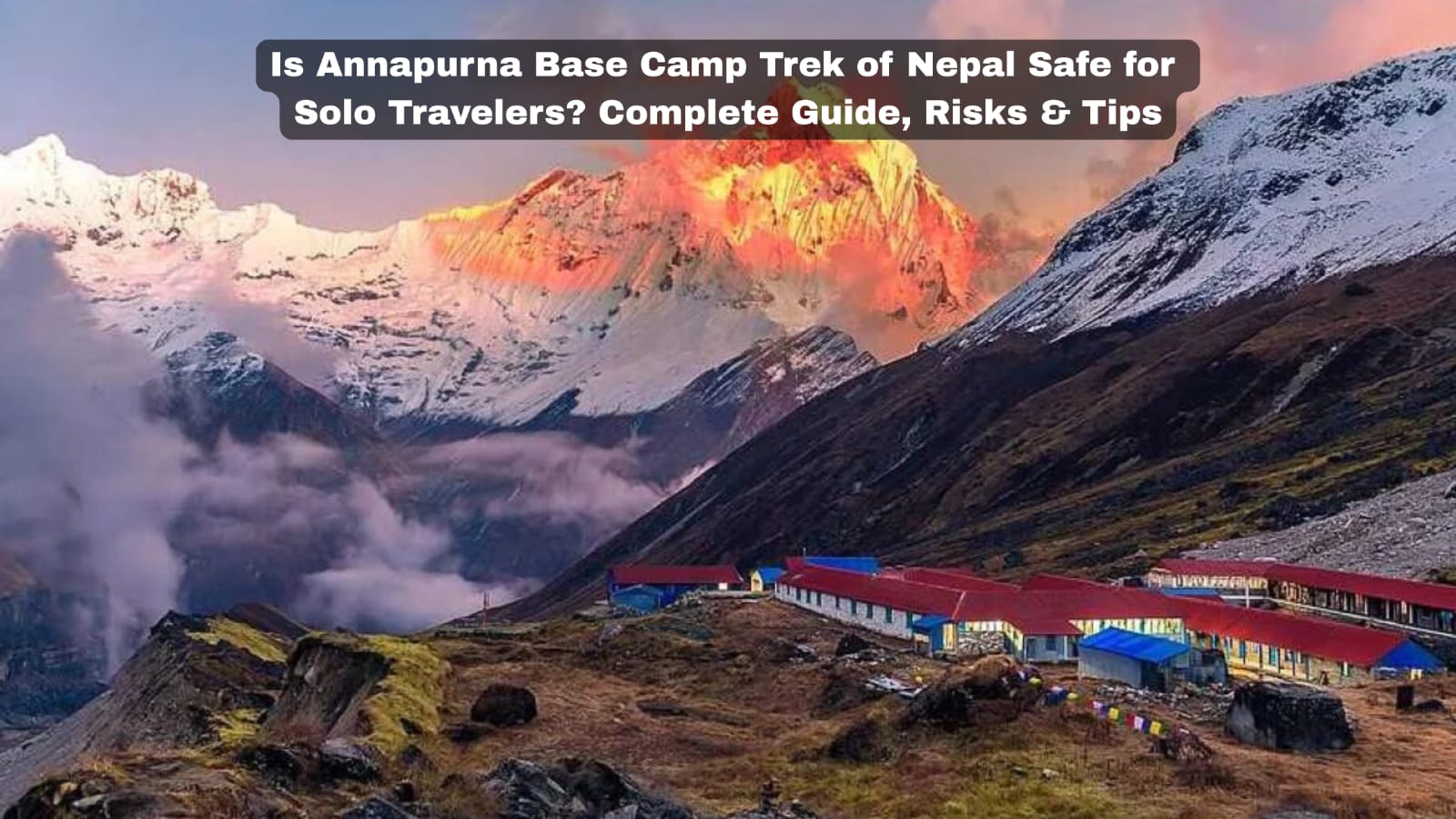
It is the sort of destination that will leave an indelible mark on your soul. Located 4,130 metres above sea level. It is enclosed within a spectacular natural amphitheatre formed by thirteen Himalayan peaks like Annapurna I (8,091m), Machapuchare (6,993m), and Hiunchuli (6,441m). The Annapurna Base Camp Trek takes trekkers to one of the most breathtaking locations on earth.
Year after year, solo trekkers from India and all over the globe seek the same answer before embarking on this epic journey: Is the Annapurna Base Camp Trek of Nepal safe for solo travellers? The honest answer? Yes, provided you have done your homework, have the knowledge and, most importantly, have the right partner.
The Annapurna Base Camp Trek: the complete route, potential risks, necessary safety measures, permits and fees, optimal seasons, and how partnering with Tourbabari can make the whole trip more enjoyable and worthwhile. The comprehensive guide by Tourbabari provides all the information a solo trekker should be aware of regarding the Annapurna Base Camp Trek.
ABC Trek: What is it?
In contrast to the Everest Base Camp Trek, this trek does not involve any need for climbing skills. The Annapurna Base Camp Trek, or the ABC trek, is considered to be one of the most beautiful and famous treks in Nepal.
It is possible for a beginner to do it as long as he is fit and motivated enough. The trail passes through dense rhododendron forests blooming in springtime, through villages inhabited by ethnic groups such as the Gurungs and Magars.
You will have a chance to feel Nepali hospitality, natural hot springs that offer some relief for tired muscles at Jhinu Danda and the river gorge of Modi Khola. Finally, the journey culminates at the base camp surrounded by mountains from all sides.
Key Information About the Annapurna Base Camp Trek
- Duration of the Trek: 7-12 days, depending on individual pace and route taken.
- Distance Covered: Around 110–115 km (one-way).
- Difficulty: Moderate to Challenging.
- Highest Altitude Reached: 4,130 metres (ABC).
- Optimal Time of Year for Visiting the ABC Trek: March-May (spring) and September-November (autumn).
- Starting/Ending Point: Nayapul or Phedi (in the vicinity of Pokhara).
- Yes (ACAP plus TIMS card).
Is the ABC Trek Safe to Undertake as a Solo Traveller?
The ABC Trek is recognised as one of the safest treks to undertake as a solo traveller. Yes! Here are a few reasons why the ABC trek stands out as safe for solo trekkers:
Marked Route and Frequent Visitors
There is a teahouse every 2–4 hours of travel, and so there is hardly any chance of feeling alone along the trail. The ABC Trek follows an established route that is well-maintained. Other trekkers, porters, and hospitable teahouse owners keep you company all along.
Well-developed Teahouse System
There will be no need for carrying tents, cooking paraphernalia, or excess food supplies. Unlike in remote areas, where one would venture into the wilderness, the Annapurna Base Camp Trek has an extremely well-developed network of teahouses and guesthouses at all key checkpoints. Food, bed, and recharging stations are provided along the entire course of the trail.
Helicopter Rescue Services Available
The permit required for visiting the area ensures that authorities keep track of the trekker, and the rescue times have been greatly reduced since last year. Helicopter rescue is reliable in the Annapurna Range.
Feels Like Home for Indians
Hindi and English languages prevail, vegetarian food is common throughout the country, the time zone is the same, and the general atmosphere seems welcoming, unlike those places far away, like Patagonia and the Alps. Indian travellers would feel at ease in Nepal due to its strong similarity to India’s culture.
Of course, being safe on a high altitude trek depends largely on yourself and your preparation and caution. Let’s see what risks lie ahead and be prepared for them.
Real Threats of the Annapurna Base Camp Trek: And Ways to Deal With Them
Risk 1: Acute Mountain Sickness (AMS)
Above 3,000 meters, reduced oxygen levels may result in symptoms like headaches, vomiting, dizziness, weakness, and decreased appetite. AMS continues to be the biggest threat of all in the Annapurna Base Camp Trek.
If left unattended, it could develop into HAPE (High Altitude Pulmonary Edema) or HACE (High Altitude Cerebral Edema), which are fatal situations if not dealt with promptly.
Managing AMS the Right Way
Climb up by only 300 – 500 meters each day once you have passed the 3,000-meter mark. Remember this principle, “trek high, sleep low. Never dismiss any symptoms and descend immediately if your condition is deteriorating. Stay hydrated; consume at least 3-4 litres of water daily.
Plan for rest days when you reach important landmarks such as Deurali (3,230m) and MBC (3,700m). Take Diamox (Acetazolamide) after consultation with your doctor.
Risk 2: Unpredictable Weather
Freezing temperatures are not uncommon even in ideal trekking periods. The mountain range is renowned for changing weather conditions, which range from clear skies to precipitation, gusty winds, or white-outs in just a few hours. Especially, once you reach altitudes higher than 3,500 metres.
Managing Weather Risks
Pack a set of high-grade gear consisting of a down jacket, wind/water-resistant outer layer, thermal underwear, fleeces, gloves, and a decent hat. Refer to daily weather forecasts either through your phone and applications such as Windy or from the teahouse staff.
Do not force yourself in worsening conditions; teahouses should never be far away. Leave early each day since the afternoons become increasingly difficult due to weather changes.
Risk 3: Path Challenges and Injuries
Sprained ankles, muscle cramps due to long descending routes, muscle fatigue, and slips and falls remain the most prevalent physical threats. Annapurna Base Camp Trek involves some very steep climbs, rocky paths, ridges, rock stairs, and occasionally the use of a fixed ladder.
How to manage trail and injury risks
They cannot be negotiated, especially when there is a descent. Use trekking poles of high quality. Move according to your speed and avoid moving at the same pace as those who hike faster. Wear broken-in, properly fitted, ankle-supporting trekking boots with great traction.
The essential items include: bandages, blister pads, antiseptic cream, pain relief medicine and any other medicine you are taking. Have a first aid kit with you. By recognising these risks, it will help to reduce all the dangers that may occur during this trip. With the management measures listed above, solo hikers can ensure their safety and enjoy the enchantment of the Annapurna Base Camp Trek.
Regardless of whether you go totally independently or opt for a professional tour package, good planning can guarantee your trip becomes an unforgettable and absolutely life-changing experience. Annapurna Base Camp Trek in Nepal is one of the most amazing journeys offered in the Himalayan mountains. Let us give you the necessary advice. Planning for Annapurna Base Camp Trek?
Risk 4: Decisions Made Alone without Local Knowledge
It is important to note that making these decisions becomes more difficult without any local knowledge and expert assistance, particularly at high altitudes.
On the Annapurna Base Camp Trek, you will be alone to make all kinds of decisions, such as whether to go forward or retreat, where to stay overnight, and how to handle the pace and emergencies that may arise during the trip.
Management of Decisions Alone Risk
- Keep the itinerary of your daily journey with your contact person in Tourbabari or someone at home.
- Ensure that you register at all TIMS checkpoints while doing the trek.
- Use the services of Tourbabari to hire a licensed local guide; this will ensure that you avoid this kind of risk completely.
- Socialise with other trekkers who use the teahouses; sometimes informal trekking groups form automatically on the trekking path, like the ABC.
Most Popular 10-Day Annapurna Base Camp Trek Itinerary
This itinerary incorporates acclimatisation days for safer ascent to altitudes:
Below is one of the most popular 10-day Annapurna Base Camp Trek itineraries made after extensive research by our expert at Tourbabari for our valued clients.
Day 1: Flight from Bangalore to Kathmandu; stay in Kathmandu for the night.
Day 2: Flight/Drive from Kathmandu to Pokhara; trek briefing & permit procurement.
Day 3: Jeep transfer from Pokhara to Nayapul; trek to Tikhedhunga (1,540m).
Day 4: Trek from Tikhedhunga to Ghorepani (2,860m); famous stone staircase ascent with rhododendron forest en route.
Day 5: Hike to Poon Hill (3,210m) for a spectacular sunrise view of the mighty Dhaulagiri and Annapurna mountain range; descend and trek to Tadapani (2,590m).
Day 6: Trek from Tadapani to Chhomrong (2,170m); start your journey towards Annapurna Sanctuary base camp.
Day 7: Trek from Chhomrong to Bamboo (2,310m); cross the beautiful bamboo and rhododendron forest trail.
Day 8: Trek from Bamboo to Machapuchare Base Camp/MBC.
Day 9: MBC to Annapurna Base Camp (4,130 m) – the most important and memorable summiting day; spend the night either at Bamboo or Chhomrong.
Day 10: Make your way down to Nayapul and drive back to Pokhara, where you can celebrate your accomplishment with a relaxing lakeside dinner.
Day 11: Return from Pokhara to Kathmandu and depart for your flight back to Bangalore.
This carefully scheduled itinerary includes adequate acclimatisation rests and gives you enough time for your body to adapt to the rising altitude while trekking to Annapurna Base Camp.
Permits Needed For Annapurna Base Camp Trek
All trekkers in the Annapurna Base Camp Trek are required to acquire two permits:
- TIMS Card: Trekkers’ Information Management System Price: NPR 2,000 (around Rs. 1,240) for individual trekkers; NPR 1,000 for registered agents. Purpose: Helps to track your safety and assist in rescue operations.
- ACAP: Annapurna Conservation Area Permit Price: NPR 3,000 (approximately Rs. 1,850) for SAARC nationals, including Indians. Acquired from: Nepal Tourism Board Offices, located in Kathmandu or Pokhara.
This not only saves a lot of time but also gets rid of the hassle of standing in a queue at the government office and getting confused with documents – no more worries for a solo traveller embarking on an Annapurna Base Camp Trek!
Tourbabari handles both the ACAP permit and the TIMS card on behalf of our guests.
Annapurna Base Camp Trek Packing List
Packing correctly for an Annapurna Base Camp Trek is as important as physical fitness.
- Clothing & Equipment
- Rain jacket or waterproof outer layer.
- Down jacket (necessary above 3500m).
- Moisture-wicking trekking pants and shirts.
- Base layers (thermal tops and bottoms).
- Neck gaiters and gloves.
- Beanies and sun hats.
- Trekking poles (a pair – essential for knee protection while going downhill).
- Trekking shoes (with good ankle support and well-broken-in).
- Gaiters (very helpful when trekking in the snow above MBC).
- Health & Safety
- First aid kit: dressings, antiseptic wipes, blister plasters, ibuprofen, ORS packets.
- Diamox (Acetazolamide): Ask your doctor first about using it.
- SPF 50+ sunscreen and UV-blocking sunglasses.
- Tablets to purify water or SteriPen.
- Medications for personal use, along with prescriptions.
- Essential Documents & Items Required
- Trekkers permit arranged by Tourbabari.
- Valid Passport / National ID Card.
- Contact Information of Emergency Services and Tourbabari’s 24×7 WhatsApp help desk.
- Extensive Travel Insurance (High Altitude Trekking / Helicopter Evacuation).
Cost of Annapurna Base Camp Trek for Indian Travellers
Round-trip flight from Bangalore to Kathmandu is expected to be INR 8,000 to INR 15,000. The realistic cost for an individual traveller from India taking up this Annapurna Base Camp trek could be expected between INR 35,000 and 65,000.
Trekkers Permit (ACAP + TIMS) can cost INR 3,000-4,000. Accommodation in Kathmandu & Pokhara (2 nights) is INR 3,000-6,000. Meals (3 meals/day) will cost in INR 6,400 -12,800. Tea house accommodation in total for 8 nights is expected to cost INR 3,200 – 6,400.
The package deal for the Annapurna Base Camp Trek in Bangalore offered by Tourbabari starts from as little as Rs. 38,000 per person. Hire of a Guide or Porter is highly recommended for safety costs INR 8,000 -14,000.
This all-inclusive rate includes flights, permits, teahouse accommodation, certified guide, meals, and round-the-clock assistance, making this package one of the most comprehensive, safe and economical deals for your trek to the Annapurna Base Camp.
Should you get a Guide for the Annapurna Base Camp Trek?
Though trekking to the Annapurna Base Camp without a guide is doable in theory, it is recommended that you hire a licensed guide if you are trekking alone.
It is because it facilitates smooth permits, teahouse, and negotiation processes, provides altitude tracking services and expertise in AMS risk management, reducing psychological strain of trekking on your own at a high altitude, knowledge of alternative routes and evacuation routes in case of emergencies, and helps the local Nepali communities in the economy.
Tourbabari exclusively works with TAAN (Trekking Agencies’ Association of Nepal) licensed guides who are professionally trained in first aid and altitude management.
Epilogue: Your Annapurna Base Camp Trek Is Waiting For You
It is a trek that offers you many lessons of patience, strength, humility, and a new vision of life. Annapurna Base Camp Trek is not only an adventure but a complete experience that will be very life-changing for Indian trekkers. Going alone? Yes, it’s perfectly okay.
Travel safely? Yes, if you are well-prepared, equipped, and permitted. To stand up at an altitude of 4,130 meters within Nepal’s largest mountain theatre with the dawn’s first rays lighting up the South Face of Annapurna I is enough to justify every bit of effort you have taken. This is precisely what Tourbabari is here for.
Are you ready for your Annapurna Base Camp Trek?
Let Tourbabari help you organise your ABC Trek from Bangalore!
Also Read: 7 Stunning Summer Getaways from India You Must Explore
Contact us for more details and a seamless trek to Annapurna Base Camp. Check out our YouTube Channel for more details.